
 EN
EN
How Pipe Endoscopes Enable Fast, Non-Destructive Pipeline Inspection
Understanding Remote Visual Inspection (RVI) for Maintenance Teams
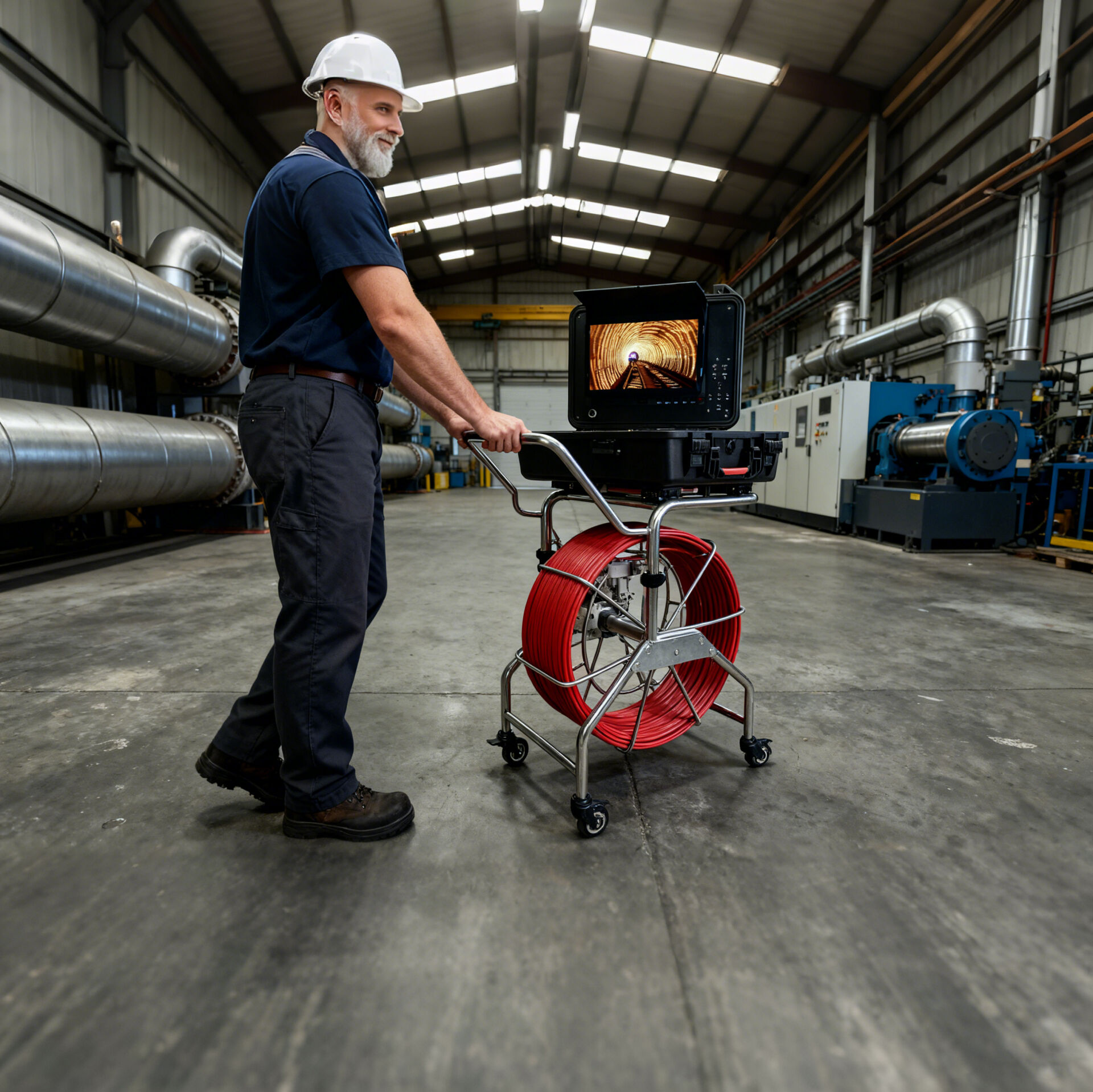
Remote Visual Inspection, or RVI for short, has really changed how we check pipelines from the inside out. Maintenance crews can now look at what's going on inside pipes without having to dig them up or take anything apart. These inspection tools basically work with tiny cameras attached to either bendy or straight probes that send live video back to operators. They get to see every inch of those pipe walls, check out the connections between sections, and even spot problems in tight corners. Since this approach doesn't damage anything during inspection, it saves companies tons of time when they need to fix issues. For oil and gas operations, water treatment plants, and other facilities where keeping things running smoothly matters most, being able to inspect without shutting down entire systems makes all the difference in the world.
High-Resolution Imaging for Detecting Corrosion, Cracks, and Blockages
Today's pipe endoscopes use LED lighting with CMOS sensors to get clear 1080p videos and pictures, spotting flaws down to about 0.1 mm in size. The high resolution catches things like early corrosion signs, tiny cracks, and even partial blockages that standard pressure testing or ultrasonic methods often overlook completely. Take mineral deposits forming inside cooling systems for example these can show up when they're still under 10% blocked, giving maintenance crews a chance to act before the system starts losing efficiency and causing bigger problems down the road.
Rigid vs. Flexible Borescopes: Choosing the Right Tool for Hard-to-Reach Areas
| Feature | Rigid Borescopes | Flexible Borescopes |
|---|---|---|
| Ideal Use Case | Straight pipe sections | Curved or branched paths |
| Diameter Range | 6–100 mm | 3–20 mm |
| Max Reach | 1.5 m | 10 m+ |
| Portability | Limited by length | Compact, coiled storage |
Rigid borescopes provide superior image stability in straight runs, while flexible variants excel in navigating complex layouts found in chemical processing and HVAC systems. Selecting the appropriate tool based on pipeline geometry reduces inspection time by 30–50%.
Reducing Equipment Downtime with Real-Time Internal Pipeline Assessment
Pipe endoscopes enable immediate assessment of pipeline interiors without system disassembly, shifting maintenance from reactive to proactive. Real-time, high-resolution imaging allows technicians to detect corrosion, cracks, and leaks early—preventing escalation into costly failures.
Quantifying the Operational Impact of Unplanned Downtime
Facilities across industries are losing around $740k every year because of unexpected shutdowns according to Ponemon Institute research from 2023. A good chunk of these problems comes from pipeline inspections which account for about 35% of all delays in places like oil refineries and chemical plants. The old way of doing things involves taking apart sections manually, something that takes anywhere between six to eight hours and gets right answers only about 72% of the time. Contrast that with modern pipe endoscopes that can finish the same job in just 45 minutes while hitting nearly 94% accuracy. When we look at remote visual inspection tech specifically, it cuts down on mistakes during diagnosis by roughly two thirds when compared to those outdated methods still in use today.
Data-Backed Results: Average Downtime Reduction of 40% Using Pipe Endoscopes
Organizations using pipe endoscopes report:
- 40% faster fault identification (PMMI 2024)
- 30% fewer production stoppages
- 25% lower repair costs through targeted interventions
One industrial valve manufacturer achieved a 78% reduction in inspection-related downtime after adopting flexible 8mm borescopes for weld assessments.
Case Study: Faster Response Times in Chemical Plant Pipeline Inspections
At a polymer processing facility experiencing inconsistent flow rates, technicians used a 5-meter articulating endoscope to identify a partially collapsed PVC section in just 12 minutes. Previously, this would have required 3 hours of system disassembly. The rapid diagnosis prevented a 14-hour unplanned shutdown, saving $18,000 in lost production.
Standardized Diagnostic Procedures for Leak Detection and Pipeline Health
Maintenance teams now use pipe endoscopes within standardized leak detection protocols, combining visual data with quantifiable testing to reduce subjectivity. These practices align with industry standards such as ASME BPVC Section V (2023) for pressurized systems.
Step-by-Step Inspection Protocols Using Pipe Endoscopes
A structured inspection begins with system depressurization and camera calibration to ±0.1 mm accuracy. Technicians then:
- Map access points using CAD schematics
- Insert the endoscope at a controlled rate of 15 cm/minute
- Record anomalies every 10 seconds with geo-tagged metadata
This approach reduces false positives by 32% compared to unstructured inspections (Industrial Maintenance Journal, 2023).
Endoscope-Based Leak Testing: Comparing Wet and Dry Methods
| Method | Sensitivity | Best Application | Limitations |
|---|---|---|---|
| Wet Testing | 0.5 mm gaps | Low-pressure water lines | Requires liquid containment |
| Dry Testing | 0.2 mm gaps | High-pressure gas systems | Needs precise pressure control |
Dry testing with helium tracer gas achieves 98% accuracy in refinery pipelines, outperforming water-based bubble tests, which detect 89% of leaks (Fluid Systems Quarterly, 2024).
Identifying Leaks Through Bubble Detection in Water Bath Tests
For submerged components, applying 1.5x operating pressure while recording slow-motion endoscope footage at 240 fps reveals distinct bubble patterns. Rapid clusters indicate structural failure, while steady streams suggest seal leaks. This technique detects 94% of leaks exceeding 0.3 L/minute in HVAC systems.
Maximizing ROI Through Preventive Maintenance and Proper Tool Care
Importance of regular endoscope cleaning, calibration, and inspection
Proper upkeep of pipe endoscopes reduces repair costs by 12–18% and extends tool lifespan by 3–5 years compared to reactive maintenance (Industry Maintenance Report 2024). Daily cleaning prevents residue accumulation that degrades sensors, while quarterly calibration maintains measurement precision within ±0.2 mm. Facilities using standardized checklists report 28% fewer lens replacements and 19% faster workflows.
Cost savings from extended equipment lifespan and reduced failures
An analysis of 142 industrial plants revealed that those maintaining endoscopes to OEM specifications achieved significantly better outcomes:
| Metric | Maintained Tools | Non-Maintained Tools |
|---|---|---|
| Annual repair costs | $4,200 | $11,700 |
| Mean time between failures | 850 hrs | 310 hrs |
| Service life | 6.2 years | 3.8 years |
Proactive maintenance lowers lifecycle costs by 35% and sustains 98% inspection accuracy over five years.
Economic benefits of preventive maintenance in industrial settings
Facilities with preventive programs for diagnostic tools experience 23% less unplanned downtime and 40% lower capital replacement costs. A typical refinery using 15 endoscopes can save $740,000 over ten years through fewer failures and extended calibration intervals. Cross-industry data shows a 9:1 return on investment for every dollar spent on preventive maintenance.
Training Technicians for Effective Pipe Endoscope Operation and Handling
Designing Effective Training Programs for RVI Equipment
Effective training combines 40% classroom instruction with 60% hands-on practice to build technician proficiency. Key components include:
- Device-specific drills for various inspection scenarios
- Simulated defect identification using real pipeline footage
- Quarterly competency evaluations measuring detection accuracy
Technicians who completed standardized RVI training reduced false-negative readings by 28% (ASNT 2022).
Best Practices for Handling and Storing Flexible Borescopes
Following proper care protocols extends flexible borescope service life by 3–5 years according to industrial records:
| Practice | Impact | Frequency |
|---|---|---|
| Post-use cleaning | Prevents debris crystallization | After every inspection |
| Articulation testing | Maintains steering accuracy | Weekly |
| Dry nitrogen storage | Inhibits internal condensation | Permanent |
Critical handling rules include avoiding bends beyond 90°, using protective caps during transport, and documenting any resistance during insertion.
Avoiding Overreliance on Visual Tools: The Need for Sensor Fusion
While pipe endoscopes offer vital visual insights, leading facilities integrate them with complementary NDT methods:
- Thermal imaging for subsurface corrosion
- Ultrasonic thickness gauging
- Gas spectrometry for microleak detection
According to a 2023 NACE report, plants using sensor fusion reduced catastrophic pipeline failures by 63% compared to those relying solely on visual inspections. A balanced strategy ensures comprehensive asset health assessments and long-term reliability.
FAQ
What is Remote Visual Inspection (RVI)?
Remote Visual Inspection (RVI) allows maintenance teams to inspect the interior of pipelines without dismantling or excavating them, using tools equipped with tiny cameras.
What are the benefits of using pipe endoscopes?
Pipe endoscopes offer benefits such as real-time assessment, higher accuracy, reduced downtime, and proactive maintenance, helping detect corrosion, cracks, and blockages efficiently.
How do pipe endoscopes reduce equipment downtime?
Pipe endoscopes provide immediate assessments and high-resolution imaging, which enable technicians to detect issues early and prevent them from leading to expensive failures.
What are the considerations for choosing between rigid and flexible borescopes?
Rigid borescopes are ideal for straight sections, providing stable imagery, while flexible borescopes are preferred for navigating complex paths in chemical or HVAC systems.
What is sensor fusion, and how does it work with pipe endoscopes?
Sensor fusion involves integrating pipe endoscopes with other NDT techniques, such as thermal imaging or ultrasonic thickness gauging, to provide comprehensive asset health assessments.
Table of Contents
- How Pipe Endoscopes Enable Fast, Non-Destructive Pipeline Inspection
- Reducing Equipment Downtime with Real-Time Internal Pipeline Assessment
- Standardized Diagnostic Procedures for Leak Detection and Pipeline Health
- Maximizing ROI Through Preventive Maintenance and Proper Tool Care
- Training Technicians for Effective Pipe Endoscope Operation and Handling
- FAQ