
 EN
EN

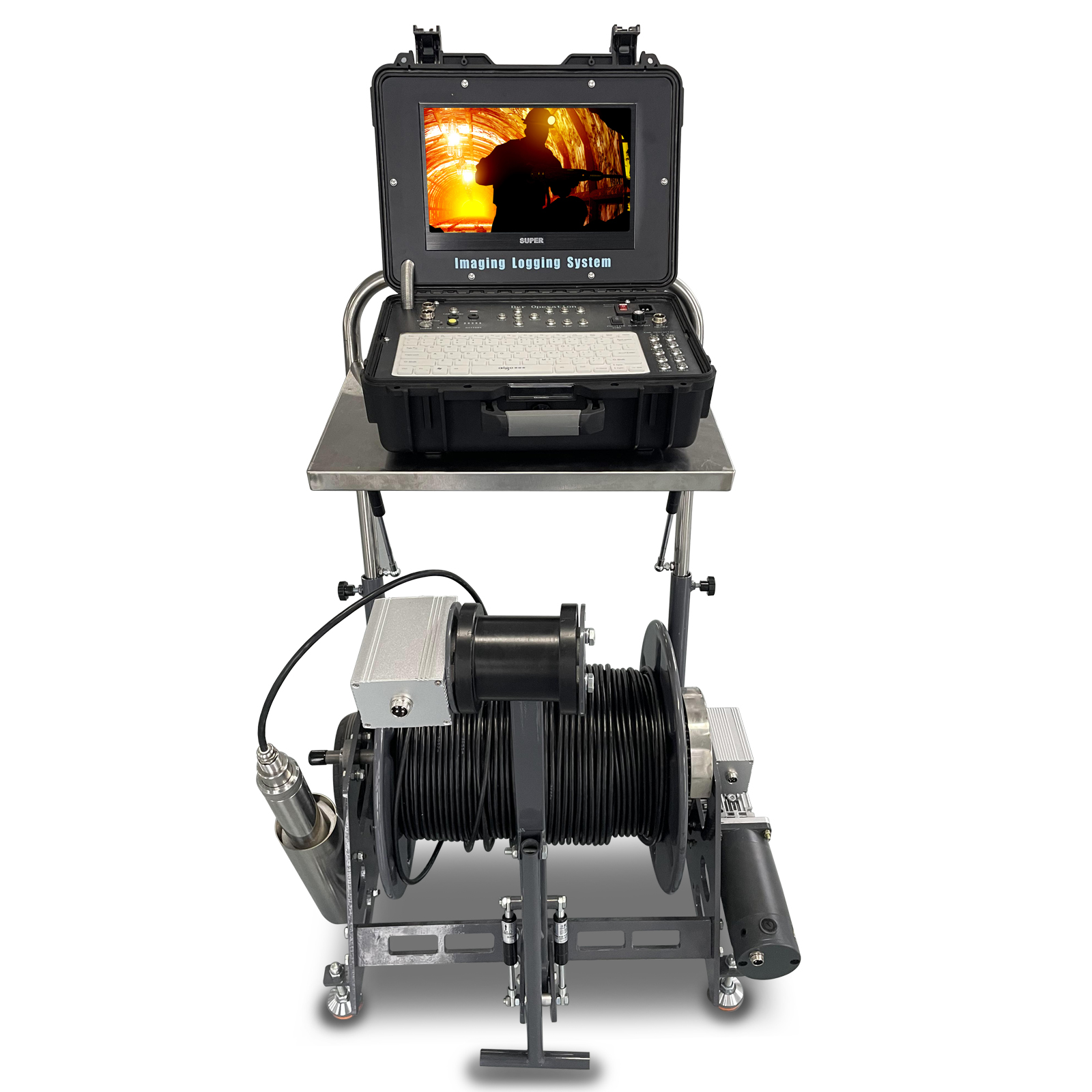
How Borehole Water Detectors Work: Science, Sensors, and Real-Time Insight
Electromagnetic, Resistivity, and Seismic Detection Principles Demystified
Modern borehole water detectors rely on three complementary geophysical principles to locate groundwater with high confidence. Electromagnetic sensors detect subsurface conductivity shifts—water-saturated zones generate distinct electromagnetic responses compared to dry rock. Resistivity tools inject controlled electrical currents; aquifers conduct electricity more readily than resistive, dry formations. Seismic detection uses precisely timed vibrations, measuring how shockwaves refract and slow when passing through water-filled fractures or porous layers. Together, these methods reduce false positives by up to 40% compared to conventional exploration techniques, as validated in 2023 field studies published by the International Association of Hydrogeologists.
From Raw Signal to Actionable Data: Real-Time Interpretation During Drilling
During active drilling, detectors process electromagnetic fluctuations, resistivity gradients, and seismic signatures through embedded algorithms that suppress geological noise. Advanced edge processors convert this data into depth-specific water probability scores—visualized instantly on surface monitors via integrated IoT telemetry. This enables drillers to adjust trajectory or terminate drilling before casing, avoiding unnecessary expenditure. Field trials across sedimentary basins (Journal of Hydraulic Engineering, 2024) confirm real-time interpretation cuts decision latency by 90%, eliminating post-drilling uncertainty and optimizing resource use.
Boosting Drilling Efficiency: Reduced Dry Holes, Lower Costs, Faster Outcomes
Modern borehole water detectors transform drilling operations by minimizing waste and accelerating outcomes. By identifying viable water-bearing zones before full-depth drilling begins, they deliver measurable gains across cost, time, and success rate.
Quantifying Efficiency Gains: Field Evidence on Failure Rate Reduction
Dry holes represent major financial risk—averaging $740k per failure in equipment, labor, and site remediation (Ponemon Institute, 2023). Electromagnetic profiling enables early differentiation between productive aquifers and dry fractures, reducing wasted effort. Projects deploying detection technology report:
- 67% fewer abandoned boreholes
- 28% reduction in drilling hours per successful well
- 19% lower fuel and bit consumption
A Tanzanian mineral exploration firm achieved $2.1M in annual savings after implementation—recouping detector costs within 14 months.
Case Study: 37% Higher Success Rate in Arid-Zone Borehole Projects
In Kenya’s Rift Valley—a region marked by drought and complex basalt geology—an NGO program using multi-sensor detectors delivered transformative results:
| Metric | Traditional Methods | With Detector Tech | Improvement |
|---|---|---|---|
| Wells per month | 3.2 | 5.5 | +72% |
| Success rate | 46% | 83% | +37% |
| Water yield accuracy | ±40% | ±12% | 3.3x finer |
Real-time resistivity mapping prevented eight failed attempts, while seismic profiling identified fracture zones yielding 800 L/min. Project duration dropped from 17 to 11 days—delivering safe water access for 12,000 residents during the 2022 drought emergency.
Key Performance Advantages of Modern Borehole Water Detectors
Modern borehole water detectors advance groundwater exploration through three interlocking capabilities: precision localization, field portability, and onboard intelligence.
Precision localization fuses electromagnetic and resistivity sensor arrays with GPS synchronization, enabling centimeter-accurate aquifer mapping—eliminating the ~30% siting error common in manual methods. Field portability is achieved through rugged, submersible (IP68), lightweight units (<3 kg) rated for operation from –20°C to 50°C, deployable in under 15 minutes without heavy transport. Onboard intelligence leverages edge computing to filter noise and auto-flag anomalies; real-time spectral analysis distinguishes clay from fractured bedrock during drilling, cutting interpretation delays by up to 80% versus offline processing.
Hydrogeologists gain immediate insights: resistivity modules identify conductivity contrasts signaling water-bearing fractures, while automated depth correction aligns layer boundaries precisely with drill logs. Battery life exceeds 10 hours per charge, and modular designs support rapid sensor swaps—for example, adding seismic modules for deep basalt surveys. AI-driven diagnostics also forecast maintenance needs, reducing field failures by 40% (hydrogeological field audits).
Borehole Water Detector vs Traditional Methods: Why Technology Wins
Modern borehole water detectors have superseded outdated approaches like dowsing rods and surface-based geological inference—which suffer from inconsistency, high failure rates, and inability to resolve narrow or deep aquifers. Unlike these subjective or retrospective methods, detectors use electromagnetic, resistivity, and seismic sensing to map subsurface water in real time, reducing dry holes by up to 50%. They pinpoint optimal drilling coordinates with centimeter-level accuracy, directly lowering operational costs. As the Ponemon Institute (2023) confirms, each unsuccessful borehole incurs ~$740k in avoidable expense. With portable systems delivering actionable insights onsite in minutes—not weeks—drilling teams achieve faster project completion, higher yield reliability, and demonstrably superior ROI.
FAQ
What are the main technologies used in modern borehole water detectors?
Modern borehole water detectors utilize electromagnetic, resistivity, and seismic detection principles. These technologies detect subsurface conductivity shifts, measure electrical current conduction, and monitor how shockwaves refract through water-filled areas.
How do real-time interpretations aid drilling operations?
During drilling, real-time interpretations convert sensor data into depth-specific water probability scores. This immediate processing enables drillers to adjust their strategies and avoid unnecessary expenses, ensuring more efficient and successful operations.
What are the financial benefits of using these detectors?
Using modern borehole water detectors reduces dry holes, lowers operational costs, and enhances success rates. For example, a Tanzanian mineral exploration firm reported $2.1M in annual savings, recouping their detector investment within 14 months.
How does the technology compare to traditional methods?
Modern detectors offer improved accuracy, real-time insights, and operational cost reductions compared to traditional methods such as dowsing rods and surface-based geological inference, which have high failure rates and inconsistencies.